Posts

Week 8- Nanotechnology and Art
Image
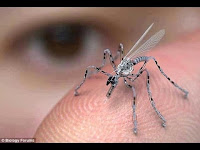
When I think of nanotechnology, the first thing that comes to mind is robots. Not the big ones, but the small ones. The ones that are so small, they could fit on your finger tip, as I have seen multiple times on science blogs, 60 Minutes, and other mediums of information. This is an artist representation of a possible nano-robot that could be created by the U.S. Air Force However, I do not often think about the common every day information that was presented in this weeks lectures and readings. Firstly, just thinking of a nanometer as 1 billionth of a meter, or as Professor Jim Gimzewski described it, the length of a glucose mol ecule, was simply mind-blowing. One of the quotes that Gimzewski discussed that really spoke to me was Richard Feyman's description that, " “The principles of physics, as far as I can see, do not speak against the possibility of  maneuvering  things atom by atom” Even  today, after all we already know about non-tech, the idea of taking th...

Week 7- Neuroscience and Art

Image
Week 7- Neuroscience and Art This colorful depictions of axons and neurons shows a true mix of science and art For me, this topic is extra fascinating, as I intend for my minor to be in neuroscience. It is clear that this idea has a very close relation with art, as the mind is the feature in our body responsible for creativity and imagination.  There will always be people who try to figure out just how the brain works in order to progress as a species. One of these people is Joseph Gall who is the found of phrenology, or what is essentially brain mapping.  By trying to determine certain characteristics of the brain from the outside, he was attempting to be able to make predictions about people's behaviors or personalities. While we now know this isn't possible, it paves the way for future work of neuroscientists, including Remona Khall and her brain mapping. To me, her work is really fascinating because we think of our genetics line as a branching out lineage, Her...

Event 2- Hammer Museum

Image
Event 2- Hammer Museum- 5/16/17 When I visited the Hammer Meuseum, I truly had no idea what to expect. Would it be contemporary paintings, political pictures, sculptures? What I found was truly more than just individual pieces of art; everything and everwhere had a message. They were all different, but they were all important. The first place I visited was an exhibit created by Oliver Payne and Keiichi Tanaami. In a half dome shaped room, there were 20 or so of a similar type of artwork that was unlike anything I had seen before. The best way to describe it would be like a tradition sketched with Japanese video game icons superimposed upon it. My very first thought when I saw this was to what the message could possibly be becuase there was clearly something it was trying to say. Imedietly, for this piece in particular, my mind went back to the Art and Robicts unit in week 3. To mix this type of middle like weapon coming out of the hands of what appears to be a representati...

Week 6- BioTech and Art

Image
As James Watson stated about Biotech, "It was simple, you can explain the idea to anyone". And it is simple to explain what it is. What's not simple, are the questions about if it should be done, and how.  What should the limit to the artistic license be when other living organisms are involved. Here, an example of some of the more Far reaching possibilities from genetic Engineering While many people may explain many different answers to this question, mine is quite simple, and likely follows the belief of another scientist, Eduardo Kac. As long as there are no living organisms that feel prolonged pain because of these genetic mutations, then it is acceptable to me. Whether it be Kathy High's creations or any of the other various projects at Simbiotica, Here is one of the many Projects engineered at Symbiotica they were likely taken on with caution and care so as not to harm things.  In many aspects, this research and artistic expression may help de-st...

Midterm Project Link

https://drive.google.com/file/d/0B4m5d0zZ3PMqSVphUERsYkVHcXM/view?usp=sharing

Week 4- Medical Technology and Art

Image
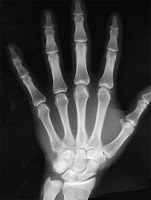
        On thing that I have not has a lack of in my life time has been injuries. And with these injuries have come lots of tests including x-rays, MRIs, CT Scans, and likely others I was not even aware of.    My first memory of such tests was an x-ray I had taken of my wrist after a hockey accident. As explained in the lecture, Rontegen’s early testing paved the way for doctors to have the ability to see my hand without actually making an incision. The thing that stuck with me more however was when Professor Vesna described Rontegen’s wife’s reaction to seeing her X-Ray, which was, “I can see my death”. When skin is removed, the bone is all our hand is left with While I’ve looked at pictures of x-rays probably hundreds of times, never before had I considered it a preview of what was to come in life.           While X-rays was my first memory of medical technology, it was certainly not my most st...

Event 1 - What's Next Lecture

Image
        The term “What’s Next” could refer to a lot of things. However, Linda Weintraub used it to describe the future of art during her symposium.  In it, Weintraub describes art as “all encompassing”. It is in every aspect of our life even when we don’t expect it to be there. Whether it be science, history, math, or so on, art plays a roll in one way or another.  One thing that a lot of people do realize is that art does a good job of allowing us to slow down and take a breath to actually appreciate something for once in the world of constant movement. It also allows us to tap into the part of our brain that is responsible for intelligent thought.  Weintraub  describes how a  person is able to use their sensor details to describe information even if they don’t have full access to it. For example, if there is an object in a box, we are able to use the creative portions of our minds to think of generalities, and then narrow it down to ce...